
2026 Construction Industry Trends
Key Takeaways:
The construction industry in 2026 is being shaped by continued economic, technological and political pressures, with impacts varying significantly by sector. While residential construction remains constrained, nonresidential, data center, manufacturing and certain infrastructure segments are showing greater stability and growth. Contractors are increasingly relying on AI-enabled planning tools, data-driven equipment management, automation, and modular or prefabricated construction methods to improve efficiency and offset labor challenges. At the same time, material cost volatility, tariff uncertainty and a tightening skilled labor pipeline continue to pressure margins, making it essential for construction businesses to stay current on industry trends and align planning, staffing and equipment decisions accordingly.
In 2025, the construction industry faced a variety of challenges associated with changes to the economic, technological and political landscape in our country. While many of these same factors are expected to affect the industry in 2026, the specific ways in which they will impact construction businesses is slightly different than they were last year. Understanding the latest trends and dynamics driving conditions in the construction industry is critical to maintaining a profitable business in the upcoming year. The following discussion will help you understand the most critical trends you’ll need to navigate in 2026.
Construction Sector Outlook for 2026
The second half of 2025 was a challenging time for the construction industry. According to a report by Deloitte, total construction spending declined approximately 3% year over year. This was largely due to challenges associated with inflation, high interest rates, labor shortages, tariff uncertainty, sharp increases in material costs, and supply chain disruptions. The outlook for 2026 is murky, with some mixed opinions regarding where the industry is headed. The Deloitte report predicts a modest bounce-back in 2026, with an estimated 1.8% growth industry wide. However, not all industry professionals share this optimism. According to an ABC survey, 65% of contractors believe the industry is contracting, and 23% of construction firms expect sales to continue declining during the first half of 2026.
However, it’s important to understand that these projections don’t provide a complete picture since the strength of the construction market varies significantly from sector to sector:
- Nonresidential construction grew 13% in 2025, and early 2026 projections point to continued growth in this sector. Education, healthcare and public safety projects are expected to provide the source of this sustained growth.
- Data center and manufacturing projects experienced record growth in 2025, increasing 101% quarter-over-quarter. This sector is expected to remain strong in 2026, driven by the infrastructure demands associated with the AI industry.
- Growth has slowed in the infrastructure sector, but it is still experiencing a modest 3% year-to-date increase in project starts.
- Residential construction struggled in 2025, as high mortgage rates resulted in fewer single- and multi-family construction projects. This sector is expected to continue struggling in 2026, and this is one of the driving forces behind the projections expecting an industry-wide decline this year.
Adoption of Technology Innovations
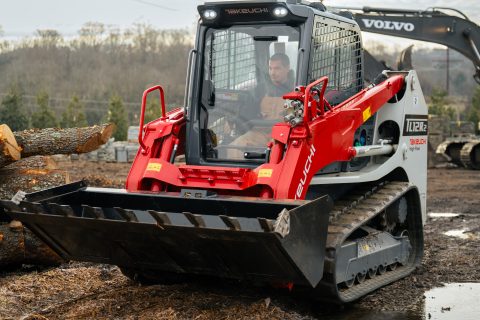 Many construction contractors have adopted digital, data-driven workflows that leverage AI-powered planning, analytics and automation systems:
- Artificial intelligence is increasingly embedded inside estimating, scheduling and maintenance platforms
- AI-assisted tools are helping teams identify scope gaps and quantity mismatches earlier in the bid process
- AI-driven forecasting tools are being used to identify risks earlier, optimize schedules and reduce rework
- Equipment telematics, utilization metrics and maintenance data are increasingly informing planning decisions, helping businesses make more confident decisions about fleet allocation, service timing and whether to own or rent specific equipment for a job
- Automation technology is increasingly being adopted to address continued labor shortages and help workers improve their performance and efficiency
Growth of Modular and Prefabricated Construction Methods
Modular and prefabricated construction are expected to grow significantly in 2026 to address the need for faster, more controlled building methods. These approaches are increasingly being used in the housing, healthcare and data center sectors due to their ability to enhance speed and repeatability in the construction process. By allowing components to be assembled off-site under more predictable conditions, modular and prefabricated construction methods can improve quality consistency and reduce weather-related delays. Digital platforms are being used to support design, tracking and delivery of prefabricated components, making them more practical to use with a wider range of project types.
Emphasis on Sustainability Initiatives
 We’re seeing an increasing emphasis on sustainability throughout the industry, with 75% of construction firms dedicating resources to achieving sustainability initiatives. This is impacting just about every aspect of the construction process:
- BIM models are being used to optimize building design and reduce waste
- Low-carbon materials such as engineered timber, low-carbon concrete and recycled metals are being increasingly used with construction projects
- Owners and regulators are requiring higher energy efficiency and carbon reporting across the building lifecycle
- Smart building technologies and IoT sensors are being used to monitor real-time energy and water use
- Modular and prefabricated construction methods reduce waste and optimize building materials usage
Material and Labor Cost Impacts
Material and labor costs remain two of the biggest challenges for construction businesses entering 2026. Tariffs influence the cost of certain materials and components, particularly those tied to steel and manufactured systems. These costs can change independently of local market demand, which introduces uncertainty into project estimates and profit margins.
Skilled labor shortages continue to influence productivity and staffing strategies. According to Deloitte, only 10% of construction workers are currently under the age of 25, and 41% of existing workers are expected to retire by 2031. These figures indicate that labor problems are likely to get worse over the next half decade, with a lack of young talent entering the industry to replace older workers reaching retirement age.
This labor shortage is affecting how reliably work can be executed and how much supervision and training is required on each job. It is also driving an increase in wages and a greater reliance on many of the productivity-enhancing tools discussed above.
McClung-Logan Can Help You Navigate the Current Issues Impacting the Construction Industry
As your construction business navigates the challenges and opportunities associated with these current industry trends, it’s important to have a dedicated heavy equipment partner who can ensure your machinery is not only right for the projects you complete, but allow you to maximize efficiency and productivity. At McClung-Logan, we’ve been the leading heavy equipment dealer in the Mid-Atlantic region since 1939, and our team will work with you to ensure you have everything you need to thrive in this competitive landscape.
We offer a wide range of new and used construction equipment for sale, as well as a large fleet of rental equipment. Our inventory includes the latest models of high-performance equipment from many of the leading brands, including:
- Volvo
- Takeuchi
- Mecalac
- Avant
- K-Tec
- Prinoth
- Gradall
- Shuttlewagon
- Dura-A-Lift
As your dedicated partner, we’re committed to your ongoing success. When you work with our team, you can count on extensive inventory on hand to ensure you receive any parts as quickly as possible, as well as a highly trained service team that is equipped to handle any repairs and maintenance you need on your equipment. In addition, we will always communicate in your preferred method (phone, text or email) to maximize your convenience.
Contact one of our branch locations to speak with a Territory Manager. McClung-Logan is a full-service construction equipment dealer serving the Mid-Atlantic region.