
How to Choose the Right Wheel Loader Size for Your Job Site
Selecting a wheel loader size is one of the most consequential equipment decisions you’ll make, as the machine’s size directly affects your fuel costs, production output, maintenance expenses and how well it actually performs on your specific job site. Choosing the wrong size wheel loader is an expensive mistake that tends to compound over time since the machine either gets overworked or it burns money sitting underutilized. Understanding the factors that determine the right size wheel loader for your specific applications will help you get this important decision right, allowing you to maximize the efficiency, productivity, profitability and lifespan of your equipment.
Understanding Wheel Loader Size Classes
Wheel loaders are generally grouped into four size classes:
- Compact – Typically used for light-duty applications in tight spaces
- Small – Handle moderate material volumes in construction and landscaping
- Medium – Workhorses for general construction and aggregate operations
- Large – Built for high-production environments like quarries and mining sites
Each size class is defined by a combination of operating weight, horsepower and rated operating capacity (the maximum load the machine is designed to carry safely). As those numbers increase, so does the machine’s ability to move heavier, denser materials in larger volumes. While these categories provide useful context, it’s important to understand that two machines in the same size class can perform very differently depending on how well their specific capacities match your materials, your site conditions and your production requirements.
The Key Factors That Determine the Right Wheel Loader Size for Your Operations
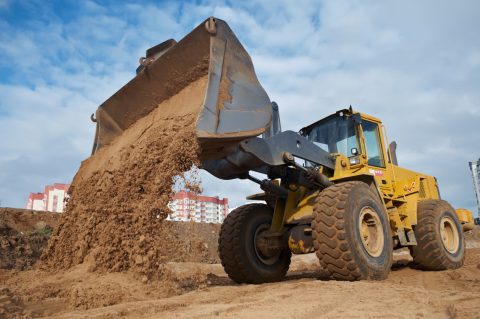 Identifying the right wheel loader size involves matching the machine’s capabilities to the specific demands of your job site, and those demands are defined by several variables that interact with each other.
Material Type and Density
The density of the materials you’re moving has a direct impact on the size loader you need. Light materials such as mulch, snow or wood chips require less lifting capacity than dense materials such as gravel, sand or ore. A machine that handles mulch efficiently may be completely overmatched moving shot rock or wet sand. Before settling on a size, know the bulk density of your primary materials and confirm the machine you’re considering has the rated operating capacity to handle them at your target cycle times.
Job Site Conditions
Your physical job site plays a significant role in determining the right machine size. Compact and small wheel loaders are better suited for confined job sites such as residential construction, nurseries or indoor facilities where maneuverability is critical. Larger open sites such as quarries, landfills or highway projects give you the room to run bigger equipment without those constraints.
Surface conditions impact your decision too. Soft, uneven or sloped terrain affects machine stability and traction, and a larger wheel loader won’t always perform well when ground conditions are challenging.
Bucket Capacity and Lift Height
Your bucket capacity determines how much material you move per cycle, and that has a direct effect on your daily production. To determine the right bucket capacity for your wheel loader, divide the amount of material you need to move in a day by the number of daily cycles you can complete.
Lift height is also important to evaluate, especially if you’re loading trucks or filling hoppers. Before you commit to a machine, know the dump height your haul units require and confirm the loader you’re considering can clear it with a full bucket.
Duty Cycle and Hours of Use
A machine that runs a few hours a day in light applications has different requirements than one running multiple shifts in a high-production environment. Continuous heavy use requires a wheel loader with the horsepower, cooling capacity and structural durability to sustain that workload without excessive wear. Choosing an undersized machine for your duty cycle accelerates component wear and drives up maintenance costs. This can reduce the lifespan of your equipment and eat into your profitability.
Matching Your Wheel Loader to Your Trucks
If your wheel loader’s primary job is loading haul trucks, the size relationship between the loader and the truck directly affects your loading efficiency. A loader that’s too small relative to your trucks will require too many passes per load, slowing your cycle times and reducing productivity. A loader that’s too large can cause you to overload trucks. Work with your heavy equipment dealer to match loader capacity to your truck payload so that your loading cycles are efficient and your trucks are filled accurately.
Common Sizing Mistakes to Avoid
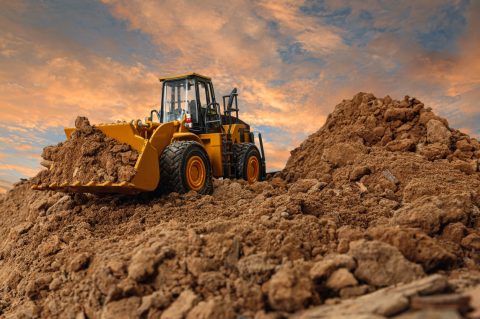 In many instances, selecting the wrong wheel loader size can be traced back to one of these common mistakes:
- Choosing a machine based on your largest or most demanding job rather than your typical day-to-day application – If that heavy-duty job represents 10% of your work, you’re paying for excess capacity the other 90% of the time.
- Basing your size decision on purchase price rather than total cost of ownership – A smaller wheel loader may have lower upfront costs, but if it’s not suited to your workload it will cost you more in repairs, downtime and reduced productivity over its service life.
- Choosing a wheel loader size without accounting for the attachments you plan to run – Attachments such as forks, grapples or snow pushers have their own weight and hydraulic requirements that affect what size machine you actually need.
- Sizing for your current operation without considering where your business is headed – If you’re planning to add trucks, take on larger contracts or expand into new applications, factor that growth into your decision before you buy.
McClung-Logan Can Help
If you’re considering purchasing new wheel loaders for your fleet, McClung-Logan can help you choose the right size machines for your job sites. We’ve been the leading heavy equipment dealer in the Mid-Atlantic region since 1939. Our team has earned this reputation by providing quality equipment at a reasonable price, backed with the customer service you need to get the most out of your investment.
We carry a comprehensive line of new and used wheel loaders, ensuring we’re able to match you with the right equipment for your specific applications. We also have an extensive rental fleet of wheel loaders if purchasing your equipment doesn’t align with your budget.
Our inventory includes the latest models of wheel loaders from some of the leading brands in the industry, including:
As your dedicated heavy equipment partner, we’re committed to your ongoing success, and we back this up by providing:
- 24/7 assistance
- A highly trained service team
- Extensive inventory on hand to ensure you receive any parts as quickly as possible
- Communication in your preferred method (text, phone or email)
- Loaner equipment, whenever possible, to minimize downtime while your equipment is being serviced
Contact one of our branch locations to speak with a Territory Manager. McClung-Logan is a full service heavy equipment dealer serving the Mid-Atlantic region.
Frequently Asked Questions: Choosing the Right Wheel Loader Size
What are the four wheel loader size classes?
Wheel loaders are generally grouped into four size classes: compact, small, medium and large. Compact models handle light-duty applications in tight spaces, small models manage moderate material volumes in construction and landscaping, medium models are workhorses for general construction and aggregate operations, and large models are built for high-production environments such as quarries and mining sites.
How do I determine the right bucket capacity for my wheel loader?
To determine the right bucket capacity, divide the amount of material you need to move in a day by the number of loading cycles you can complete in a day. The result gives you the minimum bucket capacity your operation requires.
How does material density affect wheel loader sizing?
Material density directly affects the lifting capacity your wheel loader needs. Light materials such as mulch, snow or wood chips require less capacity than dense materials such as gravel, sand or ore. A machine well-suited for light materials may be completely overmatched handling dense or heavy materials.
What is the most common wheel loader sizing mistake?
One of the most common mistakes is sizing a wheel loader based on your largest or most demanding job rather than your typical day-to-day application. If that heavy-duty job represents a small percentage of your work, you end up paying for excess capacity the majority of the time.
How should I match my wheel loader size to my haul trucks?
The size relationship between your wheel loader and your haul trucks directly affects loading efficiency. A loader that’s too small requires too many passes per load, slowing cycle times and reducing productivity. A loader that’s too large can cause you to overload trucks. Work with your heavy equipment dealer to match loader capacity to your truck payload for accurate, efficient loading cycles.
Does my duty cycle affect what size wheel loader I need?
Yes. A machine running a few hours a day in light applications has different requirements than one running multiple shifts in a high-production environment. Continuous heavy use requires a wheel loader with the horsepower, cooling capacity and structural durability to handle that workload without excessive wear. Choosing an undersized machine for your duty cycle accelerates component wear and drives up maintenance costs.