
How to Know When Your Excavator Is Due for an Upgrade
Key Takeaways:
Businesses should consider upgrading their excavators when repair costs are trending toward 50% or more of the machine’s current market value, when operating hours indicate major component wear is likely, when productivity has declined measurably, or when the machine no longer matches the size and scope of current jobsite demands. Technology gaps, including the absence of grade control, telematics and modern fuel efficiency systems, are also a factor worth weighing. The strongest case for replacement typically involves multiple signals occurring at the same time, and tracking maintenance costs and machine performance data over time makes that evaluation significantly more straightforward.
The best time to evaluate whether an excavator needs to be replaced is before the machine develops a serious issue. By that point, the excavator has already been costing more than it should for months, sometimes longer. Knowing the signs earlier puts you in a better position to plan the transition on your terms and budget for your new equipment.
Excavators are a significant investment, and the decision to upgrade isn’t always straightforward. But there are clear signals that a machine has reached the point where holding onto it no longer makes sense.
Your Repair Costs Are Climbing
One of the clearest indicators that an excavator is approaching the end of its useful life is the presence of escalating repair costs. A single major repair isn’t necessarily a red flag, but a series of large repairs is a sign that the machine is no longer delivering the value you need.
If you’re tracking maintenance expenses per machine, look at how the last 12 to 24 months compare to the years before. Hydraulic failures, final drive issues and undercarriage wear all become more frequent as a machine ages and accumulates hours. When repairs start stacking up, the cost of keeping the machine running often exceeds what the downtime and expense are worth.
The 50% Rule
A commonly used benchmark in heavy equipment management is the 50% rule: if the estimated annual repair costs on a machine are approaching 50% of its current market value, it’s usually time to start seriously evaluating replacement. This isn’t a hard cutoff, but it’s a useful reference point when reviewing your maintenance data.
The Machine Has High Hours for Its Age
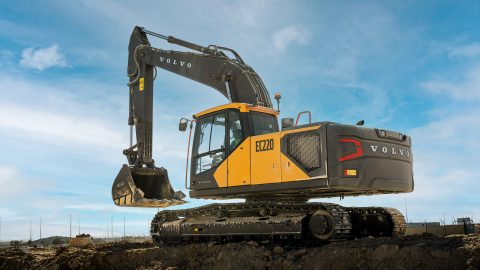 Evaluating operating hours in relation to the machine’s age can tell you a lot about the amount of work an excavator has done. While a well-maintained machine can hold up well at high hours, age and hours together will help you accurately assess the wear on your equipment.
General Hour Thresholds to Know
The following guidelines will help you determine whether your excavator may be nearing the end of its lifespan:
- Mini Excavators (Under 8 Tons) – Major component wear typically becomes a concern in the 5,000 to 8,000-hour range, depending on application and maintenance history.
- Mid-Size Excavators – Many operators start planning for replacement or major overhaul around 8,000 to 10,000 hours.
- Large Excavators – These machines are built for longer service lives, but the undercarriage, engine and hydraulic systems will eventually wear out over time. High-hour large excavators in the 12,000 to 15,000-hour range often require substantial investment to keep running efficiently.
Keep in mind that evaluating operating hours provides you with a good starting point to assess the remaining lifespan of your excavator, but it’s also important to consider the context associated with these hours. An excavator with 6,000 hours that’s been well-serviced and used in light applications may have more useful life ahead of it than a 4,000-hour machine that’s been run hard in abrasive conditions with inconsistent maintenance.
Productivity Has Declined Noticeably
An excavator that’s struggling mechanically often starts delivering declining output before it suffers a breakdown. Slower cycle times, reduced digging force and hydraulic systems that don’t respond the way they used to are all signs that performance has degraded.
If your operators are compensating for a machine’s limitations, or if the same tasks are taking meaningfully longer than they used to, that lost productivity will affect your project timelines, labor efficiency and ability to take on work at the pace your business needs.
This is worth tracking over time. If you’re comparing job productivity data across your fleet, you’ll easily be able to identify underperforming machines that are ready for an upgrade.
The Machine No Longer Matches Your Workload
Your business may evolve over time, and an excavator that was a good fit when you bought it may no longer be right for the work you’re doing today. In these situations, upgrading to an excavator that is more appropriate for your current applications will provide better value to your business than trying to complete work with a machine that is a poor fit for the jobs you’re taking on.
When You’ve Outgrown the Machine
If your jobs have shifted toward larger-scale excavation, deeper digging or more demanding material, a smaller or older machine may simply not have the reach, breakout force or bucket capacity to keep up. Running a machine outside its intended capacity to meet job demands accelerates wear and creates safety concerns.
When the Machine Is Too Much for the Work
If your workload has shifted toward smaller, more confined or precision-sensitive jobs, running an oversized excavator creates inefficiencies in your operations. Fuel costs are higher, maneuverability is limited and the machine may not be the right tool for the work you’re actually doing.
You’re Missing Out on Advanced Technology that can Improve Performance
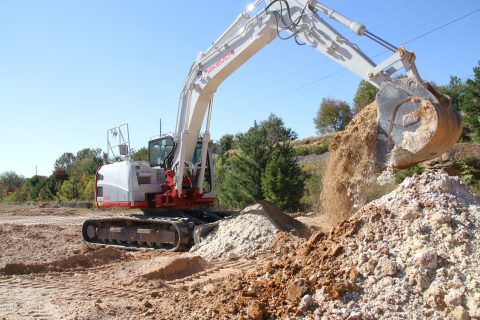 Excavator technology has advanced considerably over the past several years. Machines built five or more years ago may lack features that newer models offer as standard and depending on the type of work you do, this outdated technology can have a significant impact on performance, efficiency and cost.
Technology Upgrades that Improve Performance
If your current excavators aren’t equipped with the following technology features, you may want to consider upgrading your fleet:
- Grade Control and GPS Integration – Integrated machine control systems reduce rework, improve accuracy and allow operators to work more efficiently without constant grade checks.
- Fuel Efficiency Improvements – Newer engine and hydraulic technologies have made significant gains in fuel consumption. On a machine that runs 8 to 10 hours a day, the difference in fuel costs between an older model and a current-generation machine adds up quickly.
- Telematics and Fleet Monitoring – Modern excavators offer built-in telematics that give you real-time visibility into machine health, utilization and location.
- Operator Comfort and Safety Systems – Cab improvements, camera systems and updated safety features on newer machines improve operator performance and minimize risk exposure on the job.
None of these features are a reason on their own to replace a machine that’s otherwise performing well. But if you’re already considering replacing your excavators for other reasons, the ability to upgrade your equipment technology can meaningfully improve performance, providing an additional benefit that will help you get the most out of your machines.
McClung-Logan Can Help
No single factor alone is necessarily an indication that it’s time to replace your excavators. But when you notice several of these issues with your fleet, the decision to upgrade your equipment often becomes clear. At McClung-Logan, we can ensure you choose the right excavators for your specific needs and applications.
McClung-Logan has been the leading heavy equipment dealer in the Mid-Atlantic region since 1939. We offer a wide range of new and used excavators for sale, including the latest models from some of the leading brands in the industry:
We also have a large fleet of rental excavators. Our rental inventory gives you options in case you’re not quite ready to upgrade or you prefer to test out any models you’re interested in before committing to a major purchase.
At McClung-Logan, we’re committed to your ongoing success, and our team will always go the extra mile for you. You can count on:
- 24/7 assistance
- A highly trained service team
- Communication in your preferred method (phone, text or email)
- Extensive inventory on hand to ensure you receive parts as quickly as possible
- Loaner machines, whenever possible, to minimize your downtime when your equipment is being serviced
Contact one of our branch locations to speak with a Territory Manager. McClung-Logan is a full-service heavy equipment dealer serving the Mid-Atlantic region.