
Preparing Heavy Equipment for Peak Construction Season
Peak construction season compresses your most demanding projects, your largest crews and your tightest deadlines into a short timeframe. When your equipment is running well, that pressure is manageable. When it isn’t, a single unexpected breakdown can stall a job site, push your schedule back by days, and put you in a position where you’re scrambling for a repair or a replacement at the worst possible time.
The most effective way to protect your operation during the busy season is to get ahead of potential problems before the work starts. A structured approach to heavy equipment maintenance in the weeks leading up to peak season gives you a clear picture of where your fleet stands and what needs attention. This will ensure all necessary steps are taken to keep your equipment running at peak performance throughout your busy season.
Start With a Full Equipment Inspection
Before you schedule any repairs or order parts, you need a complete picture of the condition of each machine in your fleet. A thorough pre-season inspection gives you that baseline. It surfaces wear, damage and developing issues that aren’t always visible during the day-to-day grind of a job site. Running this inspection before peak season starts allows you to make maintenance decisions with accurate information rather than discovering problems after they’ve already affected your schedule.
Key areas to evaluate during your preseason inspection include:
- Structural Components — Check the frame, boom and attachment points for cracks, bends or signs of stress fractures that may have developed over the previous season.
- Undercarriage — On tracked machines, inspect track tension, link wear, roller condition and sprocket wear. Undercarriage repairs are among the most expensive on any piece of equipment, and catching wear early gives you more options.
- Hoses, Belts, and Seals — Look for cracking, fraying, soft spots or any signs of leakage. These are high-failure components under sustained load.
- Fluid Levels and Condition — Check the engine oil, hydraulic fluid, coolant and transmission fluid. Low levels are easy to spot, but contaminated or degraded fluid is a more common source of damage.
- Filters — Air, fuel, hydraulic and oil filters should all be inspected and replaced if they’re approaching their service intervals.
Document what you find on each machine. A written inspection record gives your service team a prioritized list to work from and helps you avoid overlooking issues on equipment that appears to be running fine.
Address Fluids, Filters and Lubrication
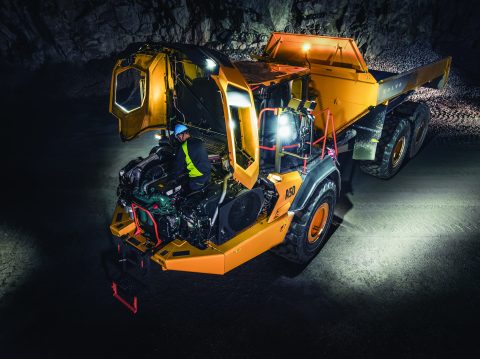 Fluid condition is one of the most reliable indicators of how hard your equipment has been working and the extent of internal wear it’s experienced. Degraded or contaminated fluids accelerate wear on the components they’re meant to protect, and running equipment into peak season on fluids that are past their service life is one of the more common causes of avoidable mechanical failures.
Change the engine oil and replace the filter if you’re at or near the manufacturer’s recommended interval. Do the same evaluation for hydraulic fluid, coolant and transmission fluid. Beyond change intervals, pay attention to the condition of the fluid:
- Milky oil can indicate coolant intrusion
- Dark or gritty hydraulic fluid suggests contamination
- Coolant that has lost its color or has visible deposits is a sign the system needs flushing
Checking the lubrication is equally important and easier to overlook when equipment has been running without obvious problems. Work through each machine’s greasing schedule and hit every point, including pins, bushings, pivot points and any other components specified in the operator’s manual. Under-lubricated components wear faster under the sustained load of a full construction season, and the damage that results is typically far more costly than the time it takes to grease them properly before the season starts.
Inspect Hydraulic Systems and Ground Engaging Tools
Hydraulic systems and ground engaging tools take the most punishment during active construction work, which makes them a priority area in any pre-season heavy equipment maintenance review. Issues in either area that go unaddressed tend to get worse quickly once the workload picks up, and a failure mid-season is significantly more disruptive than time spent on inspection and replacement beforehand.
When inspecting hydraulic systems, focus on the physical components rather than the fluid, which you’ve already evaluated:
- Inspect all hoses for soft spots, abrasion, bulging or any signs of weeping at the fittings
- Check cylinders for scoring on the rod surface, and inspect seals for leakage
- Examine fittings and connections for corrosion or looseness
Ground engaging tools wear continuously and often gradually enough that damage isn’t obvious until performance starts to suffer. Inspect bucket teeth, cutting edges, side cutters and wear plates on all relevant machines. Replace teeth that are visibly worn or that have lost their profile, and measure cutting edges against manufacturer wear limits. Running dull or worn ground engaging tools forces the machine to work harder to achieve the same output. This puts additional stress on the hydraulic system and drivetrain. It also increases fuel consumption.
Check Electrical Systems and Operator Controls
Electrical issues are among the more frustrating problems to deal with mid-season because they’re often intermittent and can affect multiple machine functions at once. A pre-season check takes little time and can prevent the kind of diagnostic headaches that show up at the worst possible moment.
Examine the batteries:
- Check the charge
- Test the cold cranking amps if you have the equipment to do so
- Inspect terminals for corrosion or looseness
You should also Inspect all lighting for function, including work lights that your crews will depend on during early morning or late evening shifts. Check wiring and connections for any visible damage, fraying or corrosion.
If your machines are equipped with telematics or onboard monitoring systems, confirm they’re functioning and that alerts are configured correctly. These systems can give you early warning on engine load, temperatures and fault codes during the season, but only if they’re set up to do so. Walk through the operator controls and displays on each machine as well. Unresponsive controls or warning lights that have been ignored are worth addressing now rather than sending a machine out with a known issue.
Build a Heavy Equipment Maintenance Schedule Before the Season Starts
 Working through inspections, fluid changes, lubrication and component checks gives you the information you need, but that work only protects you through peak season if it translates into an ongoing maintenance plan. A documented heavy equipment maintenance schedule keeps your fleet running reliably once the busy season is underway and prevents the need for reactive repairs after damage causes downtime which can derail your project timelines.
Your schedule should operate on two levels. The first is daily operator checks:
- Fluid levels
- Visual walkarounds
- Greasing (where applicable)
- A review of any warning indicators
These items only take a few minutes, but they create a consistent feedback loop that catches developing issues before they become failures.
The second level of your schedule covers interval-based preventive maintenance tasks tied to hours of operation, including:
- Oil and filter changes
- Hydraulic service
- Any manufacturer-specified inspections
Map those intervals out at the start of the season so service appointments don’t get pushed back when your schedule gets busy.
Before peak season begins, take stock of your parts inventory as well. Filters, belts, hoses, bucket teeth and fluids should be on hand in quantities that reflect how hard your fleet is going to be working. Waiting on a parts order while a machine sits idle is an avoidable problem when you’ve had time to prepare.
McClung-Logan Can Help
Partnering with a heavy equipment dealer in your area for your preseason maintenance services will ensure all of these items are performed correctly and your equipment remains in optimal condition as you enter peak construction season. At McClung-Logan, we can ensure you have the proper plan in place.
McClung-Logan has been the leading heavy equipment dealer in the Mid-Atlantic region since 1939. We offer robust maintenance services that keep your equipment in top condition and maximize its lifespan. Our service department can perform all diagnostic and maintenance work on your equipment prior to peak construction season so that it’s running properly. We’ll also work with you to develop an ongoing maintenance plan that addresses the needs of your machines throughout your busy season.
You can count on a variety of benefits when you choose McClung-Logan to perform all your construction equipment maintenance services, including:
- 24/7 assistance
- Highly trained technicians
- Communication in your preferred style (phone, text or email)
- Extensive parts inventory to ensure repairs are completed quickly and minimize your downtime
- Loaner equipment whenever possible to keep your operations running smoothly while your machines are with our technicians for maintenance services
Contact one of our branch locations to speak with a sales representative. McClung-Logan is a full-service heavy equipment dealer serving the Mid-Atlantic region.
Frequently Asked Questions About Heavy Equipment Maintenance
How often should heavy construction equipment be serviced?
Service intervals for heavy construction equipment vary by machine type and manufacturer, but most equipment requires an engine oil and filter change every 250 to 500 hours of operation. Hydraulic fluid, transmission fluid and coolant typically follow longer intervals, often in the 1,000 to 2,000 hour range. Always refer to the operator’s manual for the manufacturer’s recommended intervals for each specific machine, and adjust your schedule based on operating conditions. Equipment running in dusty, wet or high-load environments may require more frequent service than the standard interval suggests.
What should be included in a pre-season heavy equipment inspection?
A thorough pre-season inspection should cover structural components, undercarriage condition, hoses, belts and seals, fluid levels and condition, and filters. On tracked machines, pay particular attention to track tension, link wear and sprocket condition, as undercarriage repairs are among the most costly on any piece of equipment. Electrical systems, operator controls and ground engaging tools should also be evaluated before the season begins. Documenting findings for each machine gives your service team a prioritized list to work from.
How do you prevent heavy equipment breakdowns during peak season?
The most effective way to prevent breakdowns during peak season is to complete a structured maintenance review before the busy season starts. This includes a full equipment inspection, fluid and filter changes, lubrication of all greasing points and replacement of worn ground engaging tools. Establishing a documented maintenance schedule that covers daily operator checks and interval-based service keeps issues from developing undetected once the workload is at its highest. Having critical parts and supplies on hand before the season starts reduces downtime if a repair is needed.
What fluids should be checked on construction equipment before the season?
Before peak season, you should check and evaluate the condition of engine oil, hydraulic fluid, coolant and transmission fluid on each machine in your fleet. Checking levels alone isn’t sufficient. Degraded or contaminated fluid can cause significant internal damage even when levels appear normal. Look for signs of contamination such as milky oil, dark or gritty hydraulic fluid, or coolant that has lost its color or contains visible deposits. Any fluid showing signs of contamination or that is at or near its service interval should be changed before the season begins.
How does regular construction equipment maintenance affect machine lifespan?
Regular construction equipment maintenance directly extends machine lifespan by reducing the wear and stress that accumulates on critical components over time. Consistent fluid changes, lubrication and timely replacement of worn parts prevent the kind of compounding damage that leads to major repairs or premature machine failure. Well-maintained equipment also retains higher resale value, which improves long-term return on investment for construction companies that regularly cycle through their fleet. Operators working on properly maintained machines are also less likely to encounter safety issues related to equipment condition.