
Preventive Maintenance Schedules That Extend Heavy Equipment Life
Key Takeaways:
Heavy equipment maintenance extends machine life by preventing wear accumulation, controlling contamination, and identifying failures before they escalate. Effective preventive maintenance schedules include daily inspections, hour-based service intervals, fluid analysis and structured documentation. The most important drivers of equipment longevity are lubrication control, hydraulic system cleanliness, cooling system integrity and disciplined interval compliance. Preventive maintenance reduces total cost of ownership by minimizing unplanned downtime, major component failures and premature equipment replacement.
Your heavy equipment fleet represents one of the largest financial investments in your business. Maximizing the lifespan of your equipment is critical to ensuring you get the most out of this investment. As costs for new heavy equipment continue to rise, squeezing a few extra years out of your current machines can save you a significant amount of money and help you remain profitable.
Adhering to a proper preventive maintenance schedule plays a critical role in your ability to extend the life of your heavy equipment. In addition to prolonging equipment life, staying on top of important maintenance items will minimize downtime during projects and help you operate within your established budget. As a result, prioritizing preventive maintenance is one of the most important steps you can take to keep your equipment running well for years to come and ensure your business runs smoothly.
Why Preventive Maintenance Extends Equipment Life
Every major component on your equipment has a measurable service life. Engines, hydraulic pumps, cooling systems and undercarriages are designed to operate for a specific number of hours before rebuild or replacement becomes necessary. How closely your machines reach or exceed those expected hour ranges depends largely on your preventive maintenance discipline.
Preventive maintenance slows the rate of wear on all essential components:
- Clean oil reduces internal engine friction
- Proper filtration limits hydraulic contamination
- Stable cooling systems prevent heat-related damage
- Consistent lubrication reduces metal-on-metal contact
When these systems are maintained on schedule, components perform at peak levels for longer periods. When maintenance is deferred, wear accelerates and over time, this additional wear and tear can shorten the usable life of your equipment.
Core Components of a Heavy Equipment Maintenance Schedule
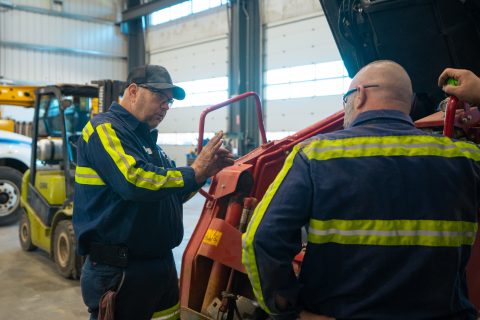 An effective heavy equipment maintenance schedule should include:
- Daily inspections
- Hour-based service intervals
- Fluid and filter management
- Wear component monitoring
- Documentation and tracking
Each of these items plays a critical role in prolonging the life of your equipment.
Daily Inspections
Daily inspections are the simplest and most cost-effective form of heavy equipment maintenance.
Before operating a machine, your operators should check:
- Engine oil level and condition
- Coolant level
- Hydraulic fluid level
- Visible leaks
- Hose condition
- Belt condition
- Tire pressure or track tension
- Warning lights and alarms
These checks identify active issues before they escalate into large problems that can potentially shorten the lifespan of your equipment.
Hour-Based Service Intervals
Most manufacturers structure heavy equipment maintenance around operating hours. Common intervals include:
- 250-hour service
- 500-hour service
- 1,000-hour service
- 2,000-hour service
While exact requirements vary by machine, the structure is consistent.
A typical 250-hour service includes:
- Engine oil change
- Oil filter replacement
- Inspection of belts and hoses
- General system inspection
At 500 hours, fuel filters and hydraulic filters are often replaced. At 1,000 hours, more extensive inspections may occur, including hydraulic fluid testing and cooling system checks.
Staying on schedule protects internal systems that are critical to prolonging the lifespan of your equipment.
Fluid and Filter Management
Fluid and filter management extends overall equipment life by protecting internal systems from accelerated wear. Clean, properly specified fluids reduce friction, carry away heat and prevent abrasive particles from circulating through critical components. When fluids break down or become contaminated, internal surfaces wear faster and stress increases across multiple systems, shortening the machine’s usable service life.
When performing fluid and filter maintenance tasks, you should prioritize:
- Using manufacturer-approved fluids
- Changing oil at recommended intervals
- Replacing filters before they become overloaded
- Storing fluids properly to prevent contamination
Cooling System Maintenance
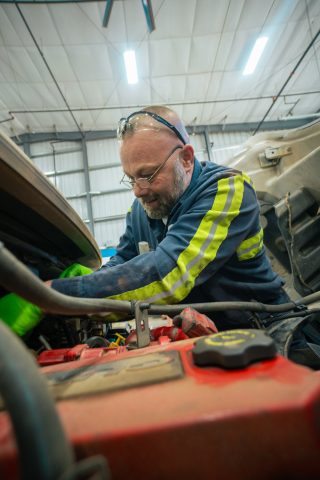 Overheating shortens equipment life significantly. As operating temperatures rise beyond intended ranges, internal protection declines and mechanical stress increases, causing components to degrade faster than they were designed to. Repeated exposure to elevated heat compounds this accelerated wear, gradually reducing overall machine durability and shortening its usable service life. Maintaining the cooling system plays a critical role in regulating the operating temperature and preserving the stable conditions required for components to function within their designed limits.
Proper cooling maintenance must include:
- Cleaning radiators and cooling fins
- Checking coolant levels and mixture
- Inspecting hoses for cracks
- Monitoring fan belts and tension
Undercarriage and Tire Monitoring
Undercarriage and tire monitoring extends equipment life by controlling wear in the components that absorb the greatest stress during operation. These systems carry machine weight, transfer power to the ground, and endure constant friction and impact. When tension, alignment and wear patterns are maintained consistently, component stress remains at manageable levels, reducing premature component degradation and preventing damage from spreading to adjacent systems.
Regular maintenance should include:
- Checking track tension
- Inspecting rollers and sprockets
- Monitoring undercarriage wear patterns
- Verifying proper tire inflation
- Checking tire condition and alignment
Electrical System Checks
Electrical system issues can shorten equipment life by disrupting the controls that regulate engine performance, fuel delivery, hydraulic function and safety systems. Voltage instability, poor connections and sensor faults create irregular operating conditions that increase mechanical stress and reduce system efficiency. When electronic controls cannot communicate accurately or receive consistent power, components may operate outside intended parameters, accelerating wear and reducing overall machine longevity.
Proper electrical system maintenance should include:
- Inspecting battery condition
- Cleaning corrosion from terminals
- Checking wiring harnesses
- Monitoring warning codes
Maintenance Documentation
 Maintenance documentation extends equipment life by ensuring preventive maintenance is performed consistently and at the correct intervals. Without accurate records, service intervals often get extended and critical inspections are missed, causing component wear to progress unchecked. Documented maintenance creates accountability and visibility, allowing you to identify patterns early and correct issues before they shorten the lifespan of your equipment.
Accurate records should include:
- Service date
- Machine hours
- Parts replaced
- Fluids used
- Observations
McClung-Logan Can Help
The proper heavy equipment maintenance schedule is critical to maximizing the life of your machines. While it’s possible to handle these preventive maintenance tasks in-house, it’s generally best to partner with a heavy equipment dealer who can make sure everything is performed correctly and on the proper schedule. At McClung-Logan, we have you covered.
McClung-Logan has been the leading heavy equipment dealer in the Mid-Atlantic region since 1939, and we take pride in delivering best-in-class service for all our customers. Our service department can perform all necessary maintenance on your heavy equipment to help you maximize its lifespan. When you work with our service team, you can count on:
- 24/7 assistance
- Communication in your preferred style (email, text or phone)
- Highly trained technicians who will keep your equipment properly maintained and in top shape
- Extensive parts inventory to ensure repairs are completed as quickly as possible
- Loaner equipment whenever possible to minimize your downtime while your equipment is with us for maintenance
Contact one of our branch locations to speak with a sales representative. McClung-Logan is a full-service heavy equipment dealer serving the Mid-Atlantic region.