
What to Look for When Buying Used Construction Equipment
Key Takeaways:
Before purchasing used construction equipment, define your operational needs, including primary tasks, duty cycle, annual hours, site constraints and any attachment or hydraulic requirements. When evaluating a specific machine, start by requesting its full history, including maintenance records, hour logs, documentation of past repairs and verification that there are no liens or stolen equipment flags. Review service hours in the context of the machine’s age and the type of work it performed. Conduct a thorough physical inspection covering the engine and powertrain, undercarriage or tires, hydraulic system, cab and electrical system, and overall structural condition. Always run the machine under load before buying, starting it cold when possible and cycling all functions at operating temperature. For any used equipment purchase, a third-party pre-purchase inspection is a worthwhile investment, particularly when buying from a private seller or at auction.
In many instances, used construction equipment may be a better investment for your business than new equipment, especially if your budget can’t accommodate the higher cost of new machinery. But there’s also more risk involved when buying used construction equipment. The right used machinery can provide a cost-effective way to add highly productive equipment to your fleet. But if you fail to evaluate used equipment properly, it can result in unexpected downtime and costly repairs that negatively impact your business and your profitability.
Getting this process right can feel overwhelming. The used equipment market is full of good deals, but it’s also full of machines that look fine on the surface and reveal their problems only after the purchase. Whether you’re buying from a used construction equipment dealer, a private seller or an auction, the evaluation process should be the same. Here’s what to look for.
Determine Your Equipment Needs
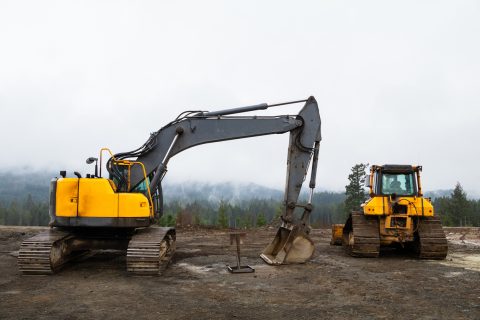 Before you start evaluating specific machines, it’s worth taking some time to clearly define what you actually need the equipment to do. If you skip this step, you run the risk of purchasing a machine with capabilities you’ll never use, or one that is insufficient for your specific applications.
Start with the basics:
- What are the primary tasks this machine will handle?
- What materials will it be working with, and how demanding is the duty cycle?
A machine that runs a few hundred hours a year on light grading work has different requirements than one that’s going to be in heavy rotation moving dense material on a production job site. Knowing your expected annual hours, typical load weights and any site constraints – clearance limitations, grade and ground conditions – will point you toward the right size class and specs before you ever start shopping.
From there, think through your operational requirements:
- Do you need high-flow hydraulics to run certain attachments?
- Will the machine need a quick coupler, or are there specialty attachments specific to your work that need to be compatible?
- Are there local emissions regulations that restrict which engine tiers are acceptable in your area?
- What are your transport constraints?
Clarifying these details upfront narrows your search considerably and helps you avoid buying a machine that isn’t ideally suited for your specific needs and applications.
Review the Machine’s History
The first step you should take when evaluating used construction equipment is to ask for its history. A reputable seller should be able to provide maintenance records, hour logs, and any documentation of past repairs or component replacements. This paperwork tells you a lot about how the previous owner treated the equipment.
Verify the serial number and title, and confirm there are no liens or stolen equipment flags on the machine. This will help you avoid legal issues and potential debts which can impact ownership of the equipment.
You should also pay attention to service intervals. Equipment that was maintained consistently with regular oil changes, filter replacements and fluid checks will generally hold up better long-term than a machine that was run hard with minimal upkeep. Gaps in the maintenance record aren’t always a dealbreaker, but they warrant extra scrutiny during the physical inspection.
In addition, check whether the machine has been in any accidents or sustained major structural damage. In many instances, minor damage may not impact the equipment’s performance moving forward, but more significant damage, especially to a machine’s frame or structural components, can potentially compromise its future reliability.
Evaluate the Machine’s Prior Service Hours
Hour meters can give you some important information about a piece of used construction equipment, but it’s important to put these hours into context. High hours on a well-maintained machine can be more appealing than low hours on one that’s been abused or poorly maintained. That said, hours do matter, and they should be evaluated relative to the machine’s age and the type of work it was used for.
A piece of equipment that spent its life doing light grading work has experienced very different stress than one that was running in heavy demolition or quarry applications. If you can find out where and how the machine was used, that context will help you interpret the hour count more accurately.
Be cautious if the hour meter reading seems inconsistently low for a machine of its age. While some machines genuinely do accumulate fewer hours, a suspiciously low reading could indicate that the meter was replaced or tampered with. If you feel the hour meter seems off from your expectations, make sure to follow up with the owner to verify that this information is accurate.
Conduct a Thorough Inspection of the Equipment
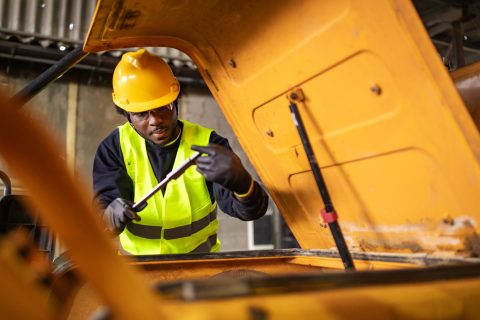 While a proper inspection takes time, it’s a critical step to ensure you’re purchasing quality used equipment that won’t require costly repairs down the road. Important systems to test include:
- Engine and Powertrain – Check for any obvious leaks or loose belts. Evaluate the levels and condition of engine oil and coolant, looking for red flags such as milky oil, contaminated coolant or metal flakes. Note how quickly the engine fires when starting the machine, and check for excessive smoke, knocks or uneven idle.
- Undercarriage or Tires – On tracked units, check the tracks, sprockets, rollers, and idlers for signs of excessive wear. On wheeled machines, look at tire condition and check for uneven wear patterns that might indicate alignment issues or other problems.
- Hydraulics – Check hoses, fittings and cylinders for leaks. Check for hydraulic fluid that’s milky or contaminated. Run all functions at operating temperature and check for slow, jerky or weak movements.
- Cab and Electrical System – Test all switches, gauges, lights, safety systems, heater/AC and seat controls to ensure your operators can run the machine comfortably and safely.
You should also do a walk-around physical inspection. Look for cracks, bends, heavy rust, as well as visible repairs to the frame, boom/arms and other key structures. These signs of damage can potentially be a red flag and cause you to question the machine’s long-term reliability.
Run the Machine
Never buy used construction equipment without running it first. A walk-around inspection will catch a lot, but there are things you can only find when the machine is under load.
Start it cold if possible. A cold start gives you a cleaner read on how the engine turns over, what the startup smoke looks like and how the machine behaves before it warms up. Watch for excessive smoke at startup. A small amount of white smoke on a cold morning can be normal, but blue or black smoke is worth investigating.
Once the machine is warmed up, cycle the hydraulics through their full range of motion. Listen for unusual sounds in the pump, check response time and note whether there’s any drift or sluggishness in the cylinders. Drive the machine to assess the drivetrain, transmission and undercarriage under actual operating conditions.
If you’re not experienced enough to run the machine yourself, consider bringing a qualified mechanic or one of your equipment operators. Their expertise can catch things that a less experienced buyer might miss.
Get a Pre-Purchase Inspection
Whenever you’re purchasing used construction equipment, a third-party pre-purchase inspection is a worthwhile investment. An independent inspector with no stake in the sale will give you an unbiased assessment of the machine’s condition, identify existing issues, and often estimate the cost of repairs or upcoming maintenance items.
This is especially important when buying from a private seller or at auction, where you may have limited recourse if problems surface after the sale.
McClung-Logan Can Help You Choose the Right Used Construction Equipment
Partnering with the right used construction equipment dealer can take a lot of the uncertainty out of this process. At McClung-Logan, we’ve been the leading construction equipment dealer in the Mid-Atlantic region since 1939, and our team has built our reputation by providing reliable, high-quality equipment and dealing honestly with our customers. Our team will work with you to understand your needs, allowing us to provide customized used equipment recommendations that will help your business thrive for years to come.
We offer a wide range of used construction equipment for sale. Our inventory includes the latest models of high-performance equipment from many of the leading brands, including:
- Volvo
- Takeuchi
- Mecalac
- Avant
- K-Tec
- Prinoth
- Gradall
- Shuttlewagon
- Dura-A-Lift
As your dedicated construction equipment partner, we’re committed to your ongoing success. Our factory-trained technicians inspect all used equipment to ensure that our strict safety and reliability standards are upheld. In addition, our service team is equipped to handle any maintenance and repairs you need throughout the life of your equipment. We also carry an extensive inventory of parts on hand to ensure all repairs are completed as quickly as possible.
Contact one of our branch locations to speak with a Territory Manager. McClung-Logan is a full-service construction equipment dealer serving the Mid-Atlantic region.